Wells, cisterns and tunnels
The earliest underground works were mainly connected with the search for water. Narrow, deep wells, rainwater collection tanks and small channels allowed the city to withstand long periods of isolation.

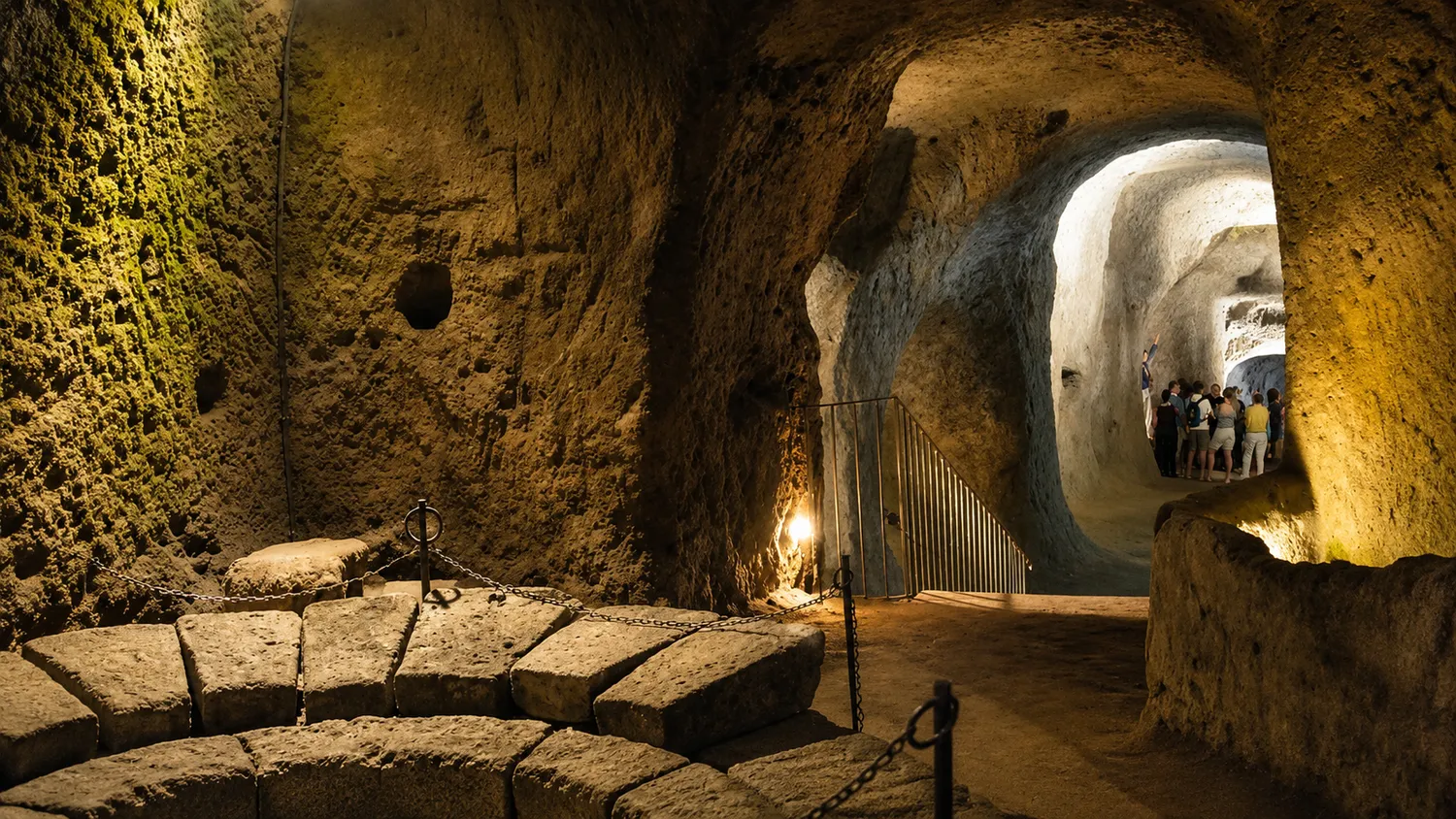
Beneath the streets and houses of the historic centre lies a world of caves, wells, cisterns and working areas excavated into the cliff.
Descend into historyAround 2,500 years of history preserved within the Orvieto cliff.
One of Orvieto’s most surprising features lies just a few metres beneath its historic centre. Over the centuries, its inhabitants excavated the tuff, creating a vast network of caves, tunnels, wells, cisterns, quarries and working areas.
This underground world was not created according to a single plan. Each generation adapted the cliff to its own needs: the Etruscans searched for and stored water, during the Middle Ages building materials were extracted and storage rooms were created, while in later periods some cavities were used to produce olive oil, raise pigeons and preserve food and wine.
The guided visit to Orvieto Underground allows visitors to pass through some of the most significant cavities and to read, directly on the walls, the traces left by the people who worked and lived underground.
The nature of the cliff provided exceptional defence, but water was difficult to obtain on the plateau. The inhabitants of ancient Velzna therefore excavated deep vertical wells, cisterns for collecting rainwater and tunnels used to distribute it.
On the walls of some wells, the pedarole can still be recognised: small recesses used as footholds and handholds during the descent. These simple but ingenious marks show how important it was to reach and control the water resources.
Excavation continued over the following centuries. The cavities became quarries for tuff and pozzolana, cellars, storage rooms, workshops and places used to dispose of materials. Objects found in the so-called butti have provided valuable information about daily life in medieval and Renaissance Orvieto.
Each space preserves a different function and helps explain how the city used the underground world over the centuries.
The earliest underground works were mainly connected with the search for water. Narrow, deep wells, rainwater collection tanks and small channels allowed the city to withstand long periods of isolation.
Tuff and pozzolana were extracted from underground and used to build and transform the city above. The walls still preserve the marks of the tools used during excavation.
An ancient olive-oil production facility was found in one of the cavities, with millstones, a press, a hearth, feeding troughs for animals and systems for collecting and storing water.
Many walls are covered with small rectangular niches. They were used for raising pigeons, a food resource that could be easily managed within the cliff.
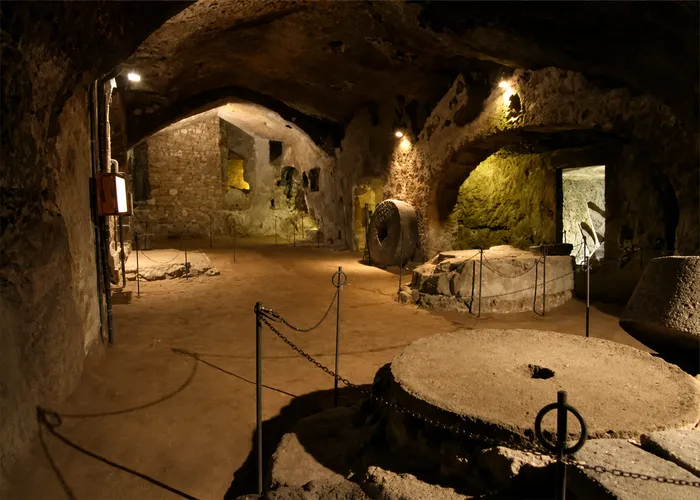
The caves do not form a parallel city designed at a single moment, but are the result of different interventions, layered and adapted over time. Stairways, passages and rooms change shape according to the needs of those who used them.
In some places, openings to the outside bring light and air, while silence and humidity dominate the innermost areas. This alternation makes the relationship between the city built above the cliff and the spaces excavated within it clearly visible.
Speleological and archaeological research has made it possible to study many of these spaces systematically. The route open to visitors represents only part of the underground heritage, but it is enough to understand the complexity and continuity of Orvieto’s underground history.
The route is guided and begins in the historic centre, very close to the Cathedral.
For up-to-date opening times, tickets and bookings consult the official Orvieto Underground website.
A peaceful and easily accessible base for discovering the cliff above and below ground.
B&B Il Terrazzo is located at the foot of the cliff, just a few minutes from the historic centre. You can leave your car in the free parking area in front of the property, visit Orvieto Underground, the Cathedral and the city’s other monuments, then return to a peaceful setting with breakfast included.
It is a guided visit through some of the artificial cavities excavated into the tuff beneath Orvieto’s historic centre over approximately 2,500 years.
The route includes wells and cisterns of Etruscan origin, tunnels, quarries, working areas, an ancient olive mill, dovecotes and traces of the activities once carried out underground.
The guided visit generally lasts about one hour. It is nevertheless advisable to check the duration, timetable and availability on the official website.
The visit departs from the ticket office at Piazza Duomo 23, in Orvieto’s historic centre.
At weekends and during busy periods, it is advisable to book in advance through the official contacts.
No. They are two different visits: Orvieto Underground passes through some of the underground city’s cavities, while St Patrick’s Well is a specific Renaissance structure located near Piazza Cahen.
Visit the underground city and complete your trip with the Cathedral, St Patrick’s Well and the lanes of the historic centre.
Book your stay