A route without crossings
The two spiral staircases do not communicate directly: those descending and those climbing follow different routes, preventing delays even when animals were passing through.

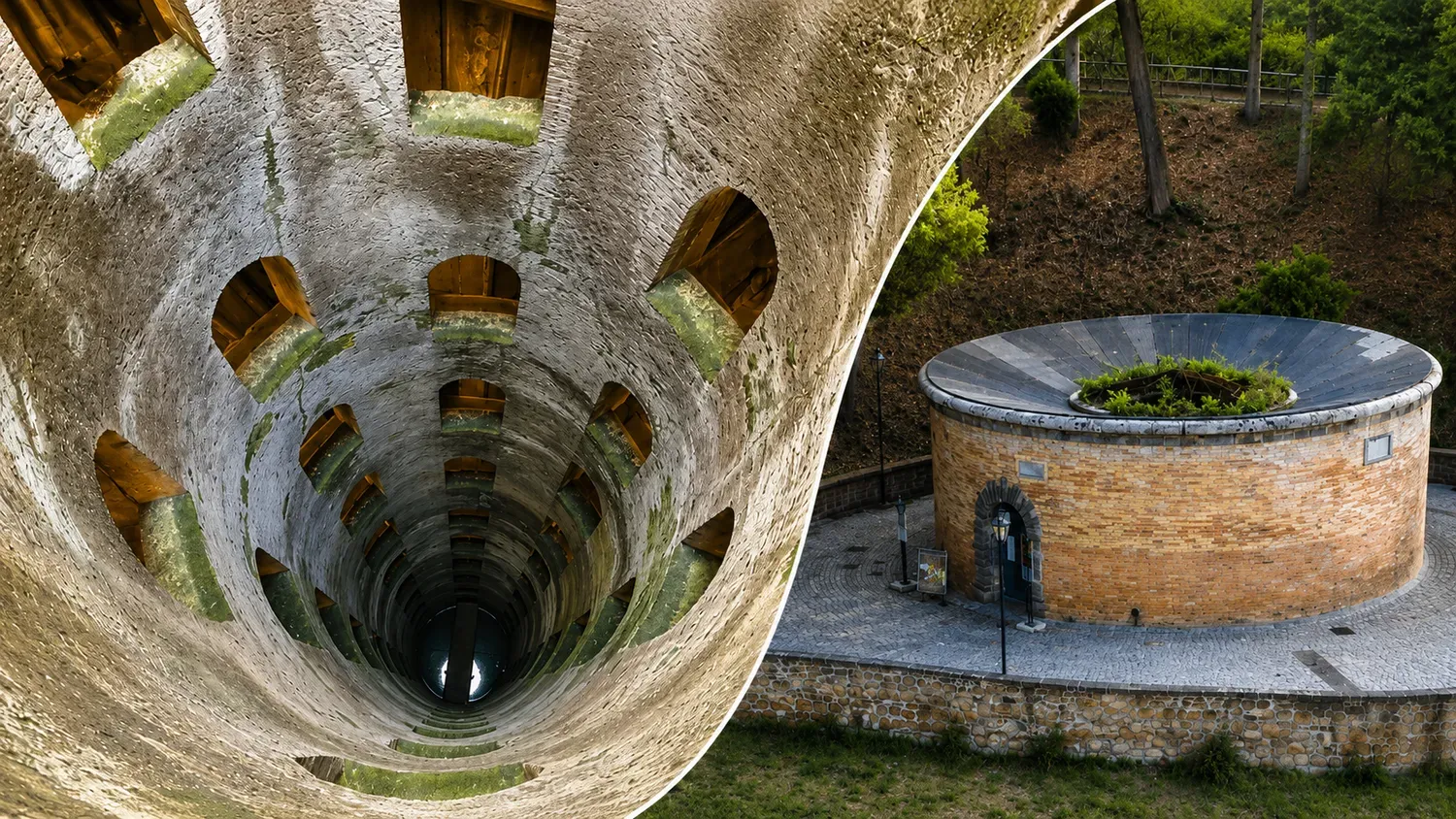
A masterpiece of Renaissance engineering, excavated into the cliff and famous for its double spiral staircase.
Discover its historyWater, safety and architectural ingenuity in the heart of the Orvieto cliff.
St Patrick’s Well was commissioned in 1527 by Pope Clement VII, who had taken refuge in Orvieto after the Sack of Rome. The pope feared that the Umbrian city might also come under siege and wanted to guarantee it a safe, permanent water supply.
The project was entrusted to Antonio da Sangallo the Younger, who was already involved in strengthening the city’s fortifications. The work was completed in 1537, during the pontificate of Paul III, and was initially known as the Fortress Well, because it was intended primarily to serve the nearby fortress.
During his 19th-century travels through Etruria, the English diplomat and archaeologist George Dennis identified the Cathedral and the Well as Orvieto’s two great monumental attractions. Even today, visitors are struck by the contrast between the modest entrance at ground level and the vast space opening beneath it.
The Well’s most famous feature consists of two independent spiral ramps winding around the same large central cylinder. One ramp was used to descend towards the water and the other to climb back up.
In this way, people and pack animals could move at the same time without meeting or obstructing one another. Mules descended with empty containers and climbed back up carrying water along a separate route.
The 72 arched openings distributed along the inner wall illuminate the route and allow visitors to observe the central void from different heights. The natural light, which gradually fades during the descent, makes the visit especially atmospheric.
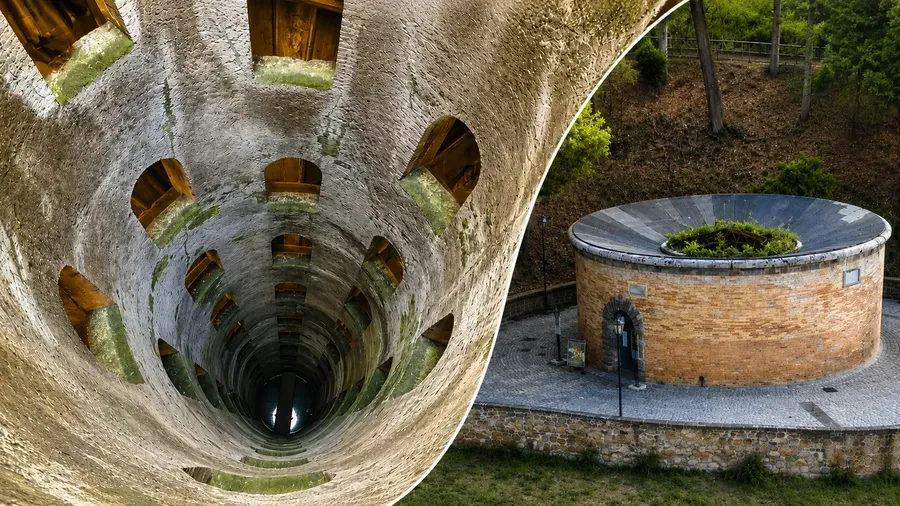
A functional structure transformed into one of the most ingenious works of Renaissance architecture.
The two spiral staircases do not communicate directly: those descending and those climbing follow different routes, preventing delays even when animals were passing through.
The 72 openings facing the central cylinder bring light along the ramps and create a continuous alternation of shadows, arches and perspectives.
The well penetrates deep into Orvieto’s tuff rock, demonstrating the ability of Renaissance designers to adapt architecture to the natural setting.
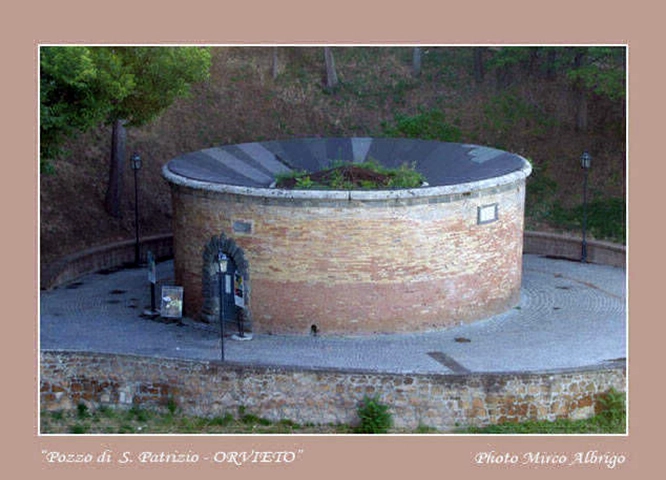
During construction, the work was known as the Fortress Well, because of its proximity to Albornoz Fortress and its intended role in supplying water during a siege.
The current name became widespread in the 19th century and recalls the Irish legend of St Patrick’s Purgatory, a very deep cave that tradition symbolically regarded as a passage to the afterlife.
The association between the Orvieto monument and the legendary cave probably arose from the depth of the well and the sense of mystery that still accompanies the descent today.
The siege feared by Clement VII never occurred, but the structure remained an exceptional testimony to the city’s history and to the ingenuity of Antonio da Sangallo the Younger.
The descent is fascinating, but it involves a considerable number of steps.
Opening times, prices and access conditions may change. Before visiting, check the official Orvieto tourism website.
A peaceful stay at the foot of the cliff, just a few minutes from the historic centre.
From B&B Il Terrazzo, you can easily reach the historic centre and devote the time needed to St Patrick’s Well, the Cathedral and the city’s other monuments. The property offers free parking in front of the entrance, breakfast included, air-conditioned rooms and a warm, family-run welcome.
The well was commissioned by Pope Clement VII in 1527 and completed in 1537 during the pontificate of Paul III.
The design was entrusted to the architect Antonio da Sangallo the Younger.
The visitor route includes 248 steps arranged within the famous double spiral staircase.
The separate ramps allowed pack animals descending towards the water and those climbing back up to move without obstructing one another.
The name, which became widespread in the 19th century, refers to the Irish legend of St Patrick’s Purgatory, a deep cave symbolically regarded as an entrance to the afterlife.
It is located near Piazza Cahen, close to Albornoz Fortress and the upper station of the Orvieto funicular.
Visit St Patrick’s Well, the Cathedral and the historic centre while staying in a convenient and peaceful area.
Book your stay